

Microscopy and Imaging

Hitachi SU-70 Field Emission-SEM (FE-SEM)
Description
Field emission scanning electron microscope (SEM) equipped with a backscattered electron (BSE) detector, an EBSD camera, and an EDX detector for chemical analysis. Nanometric imaging possible. This scanning electron microscope operates with a Schottky thermionic emission source.
Contacts
- Elmira Moosavi
- Lucas Hof
- Philippe Bocher
- Vincent Demers

Confocal Microscope Hirox
Description
Confocal optical microscope for producing images with magnification ranging from 20x to 5000x. Capable of performing 3D measurements (roughness, etc.).
Contacts
- Elmira Moosavi
- Lucas Hof
- Philippe Bocher
- Vincent Demers

Microscope Confocal Laser LEXT4100
Description
Confocal optical microscope for observing flat surfaces with magnification ranging from 50x to 1000x. Polarized light can be used to identify the different grain orientations of the material. Confocal laser allows for focus that avoids blurred areas. Images can be obtained by combining several images.
Contacts
- Elmira Moosavi
- Lucas Hof
- Philippe Bocher
- Vincent Demers

Microscope Keyence VHX-7000
Description
The Keyence VHX-7000 is a high-resolution 4K digital microscope designed for fast, detailed imaging and surface analysis. It offers wide magnification, exceptional depth of field, and integrated 2D/3D measurement capabilities for a wide range of materials and industrial applications.
Contacts
- Elmira Moosavi
- Lucas Hof
- Philippe Bocher
- Vincent Demers

Ion milling _IM4000 PLUS
Description
The Hitachi IM4000PLUS is an advanced ion milling system designed for high-quality surface preparation of materials for SEM analysis. Using a broad argon ion beam, it produces flat, artifact-free cross-sections and polished surfaces suitable for microstructure observation, EBSD, EDS, and other analytical techniques. Unlike mechanical polishing, ion milling removes material with minimal deformation, enabling accurate analysis of multi-phase materials, metals, ceramics, polymers, composites, and electronic components. The IM4000PLUS supports both cross-section milling and flat milling modes, making it highly versatile for research and industrial applications.
Contacts
- Elmira Moosavi
- Lucas Hof
- Philippe Bocher
- Vincent Demers

SEM SU8230 Hitachi
Description
Scanning Electron Microscope (SEM) equipped with a cold field emission gun.
Contacts
- Elmira Moosavi
- Lucas Hof
- Philippe Bocher
- Vincent Demers

SEM TM3000 Hitachi
Description
Benchtop scanning electron microscope (SEM) capable of producing images with up to 30,000x magnification at voltages of 5 or 15 kV in standard mode or in charge reduction mode for low-conductivity materials. Equipped with an EDX detector for chemical analysis.
Contacts
- Elmira Moosavi
- Lucas Hof
- Philippe Bocher
- Vincent Demers

Microscope Keyence VR-5200
Description
Confocal optical microscope for producing images with magnification ranging from 20x to 160x. Capable of performing 3D measurements (roughness, etc.).
Contacts
- Elmira Moosavi
- Lucas Hof
- Philippe Bocher
- Vincent Demers
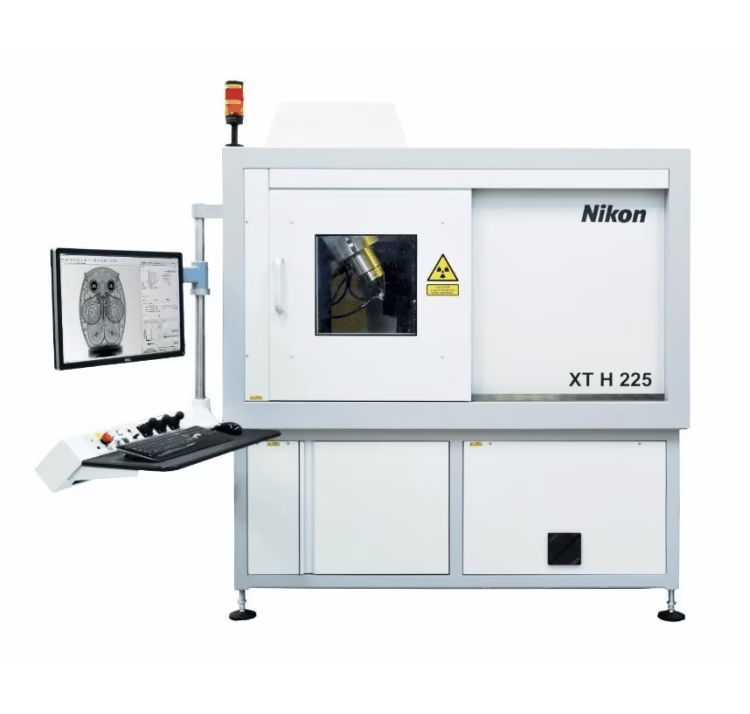
XT H-225 Nikon
Description
The Nikon XT H 225 X-ray CT System is a versatile microfocus computed tomography (CT) platform designed for high-resolution, non-destructive inspection across a broad range of materials and component sizes. It is ideally suited for R&D, failure analysis, and production quality control. The system achieves voxel sizes from 5 to 100 µm, enabling detailed 3D visualization of internal geometries, defects, and material structures. Its large field of view supports small to medium-sized parts, and accommodates samples up to 600 mm in scan height.
Contacts
- Elmira Moosavi
- Lucas Hof
- Philippe Bocher
- Vincent Demers
Materials Characterization

CLEMEX Micro hardness
Description
Automated microscopic hardness testing machine, capable of making indentations on a scale of tens of micrometers with very small loads, and therefore testing very localized hardness (grains, precipitates, etc.).
Contacts
- Elmira Moosavi
- Lucas Hof
- Philippe Bocher
- Vincent Demers

Nanoindentation Anton-Paar
Description
The NHT³ nanoindenter is designed to measure hardness, elastic modulus, creep, and other surface properties from the nanometric to the micrometric scale. Its load range goes from 0.1 mN to 500 mN, providing unmatched versatility. Thanks to its unique surface-reference method, instrumented indentation measurements can be performed immediately without waiting for thermal stabilization. The “Quick Matrix” indentation mode ensures high throughput (up to 600 measurements per hour). By adding another mechanical surface testing method to the NHT³ (for example, scratch testing), the platform can accommodate multiple testing heads to cover all force ranges and provide a more complete picture of your sample.
Contacts
- Elmira Moosavi
- Lucas Hof
- Philippe Bocher
- Vincent Demers

XRD Anton Paar_XRDynamic 500
Description
The Anton Paar XRDynamic 500 is a high-performance X-ray diffraction (XRD) system designed for advanced material characterization. It supports a wide range of applications including phase identification, crystallite size and microstrain evaluation, and quantitative phase analysis.
The system integrates a high-brilliance X-ray source with a highly sensitive 2D detector, enabling fast acquisition and high-resolution diffraction data with excellent signal-to-noise performance. Its versatile sample handling and multi-geometry capabilities allow measurements in reflection, transmission, grazing incidence, and capillary modes on a wide variety of materials such as metals, ceramics, polymers, thin films, and powders.
.
Contacts
- Elmira Moosavi
- Lucas Hof
- Philippe Bocher
- Vincent Demers

XRD X’Pert³ Panalytical
Description
The Malvern Panalytical X’Pert PRO MPD is a versatile multi-purpose X-ray diffraction (XRD) system designed for comprehensive material characterization across a wide range of applications. It supports phase identification and quantification, crystallite size and microstrain analysis, texture (preferred orientation) studies, and residual stress evaluation. The system is built around a modular goniometer platform, enabling quick configuration changes and compatibility with various optics, sample stages, and detectors. Its high-precision control system, combined with optional 1D or 2D detectors, offers high-quality diffraction data with robust signal-to-noise performance for powders, bulk solids, thin films, and coatings.
Contacts
- Elmira Moosavi
- Lucas Hof
- Philippe Bocher
- Vincent Demers
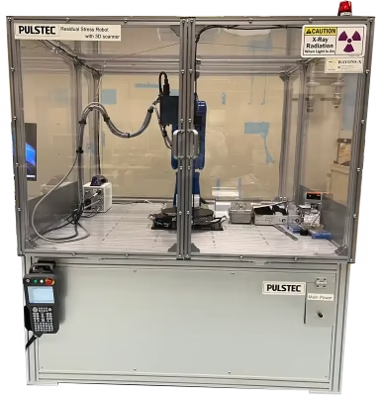
Robotic Pulstec µ-360s Residual Stress Mapping System using XRD with 3D Scanner
Description
The robotic stress mapping system integrates XRD analysis, a robotic arm, and a 3D scanner to provide high-precision mapping of residual stresses and FWHM. This is an ideal and useful mapping technique for large samples (up to 400 × 400 × 400 mm) with different configurations, shapes, geometries, surface structures, and chemical compositions. It has versatile oscillation capabilities, time-saving automation, Debye-Scherrer ring simulation functions, and high accuracy and stability. Excellent for shiny or glossy objects. Automatic control of the 3D scanner’s power eliminates the need for surface treatments.
Contacts
- Elmira Moosavi
- Lucas Hof
- Philippe Bocher
- Vincent Demers

Granulomètre LS13320 XR
Description
Equipment for measuring and analyzing powder size distribution. Two modules are available: a dry module and a wet module where the powders are submerged in a liquid. The particle size measurement range is between 0.01 μm and 3500 μm.
Contacts
- Elmira Moosavi
- Lucas Hof
- Philippe Bocher
- Vincent Demers
FTIR Nicolet 6700
Description
Contacts
- Elmira Moosavi
- Lucas Hof
- Philippe Bocher
- Vincent Demers

DSC PerkinElmer Pyris 1 DSC
Description
The PerkinElmer Pyris 1 DSC is a high-sensitivity Differential Scanning Calorimeter (DSC) designed for advanced thermal analysis and research-grade material characterization. It provides precise measurement of heat flow associated with thermal transitions such as glass transition (Tg), melting (Tm), crystallization (Tc), curing reactions, and heat capacities (Cp).
Contacts
- Elmira Moosavi
- Lucas Hof
- Philippe Bocher
- Vincent Demers

DSC2500 TA Instruments
Description
The DSC 2500 from TA Instruments is a high-performance Differential Scanning Calorimeter (DSC) designed for advanced thermal analysis of materials. It enables accurate measurement of thermal transitions such as melting temperature (Tm), glass transition temperature (Tg), crystallization, curing, as well as heat capacity (Cp) and reaction enthalpies.
Contacts
- Elmira Moosavi
- Lucas Hof
- Philippe Bocher
- Vincent Demers

TGA Pyris Diamond
Description
Thermogravimetric analysis: measurement of the change in mass of a sample as a function of temperature and time. The operating ranges of the device are from 20°C to 600°C, and samples must have a mass of less than ~50 mg.
Contacts
- Elmira Moosavi
- Lucas Hof
- Philippe Bocher
- Vincent Demers
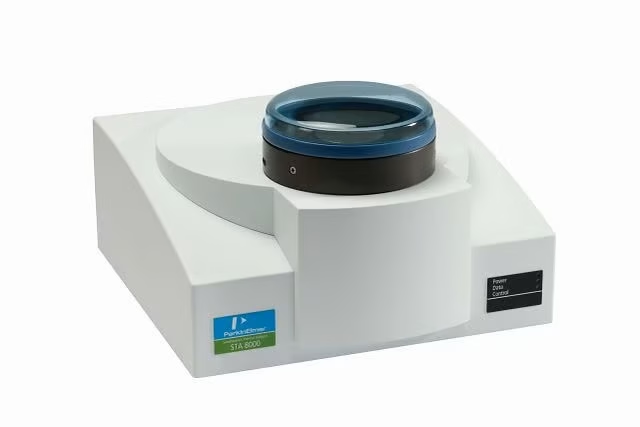
STA8000 PerkinElmers
Description
Contacts
- Elmira Moosavi
- Lucas Hof
- Philippe Bocher
- Vincent Demers
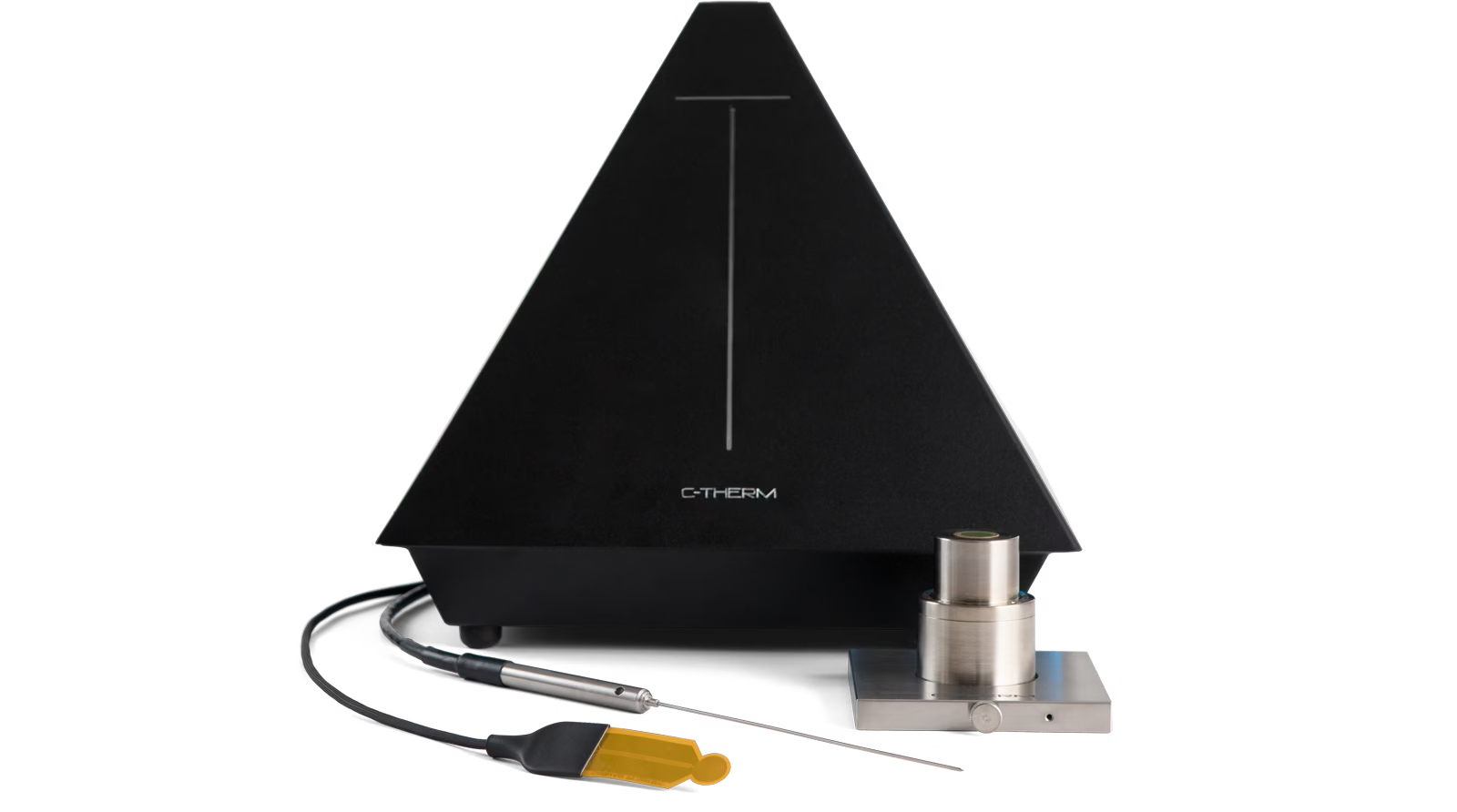
C-Therm
Description
Instrument for measuring thermal conductivity and thermal effusivity. Capable of measuring solid, liquid, or powdered samples.
Contacts
- Elmira Moosavi
- Lucas Hof
- Philippe Bocher
- Vincent Demers

Potentiostat – Autolab PGSTAT302N
Description
This high-end high-current potentiostat/galvanostat, with a compliance voltage of 30 V and a bandwidth of 1 MHz, combined with our FRA32M module, is specially designed for electrochemical impedance spectroscopy. In addition, standard electrochemical characterization can be performed, such as polarization curves and cyclic voltammetry (CV).
Contacts
- Elmira Moosavi
- Lucas Hof
- Philippe Bocher
- Vincent Demers

Rhéomètre FT4
Description
Equipment used to measure the flow properties of dry powders.
Contacts
- Elmira Moosavi
- Lucas Hof
- Philippe Bocher
- Vincent Demers
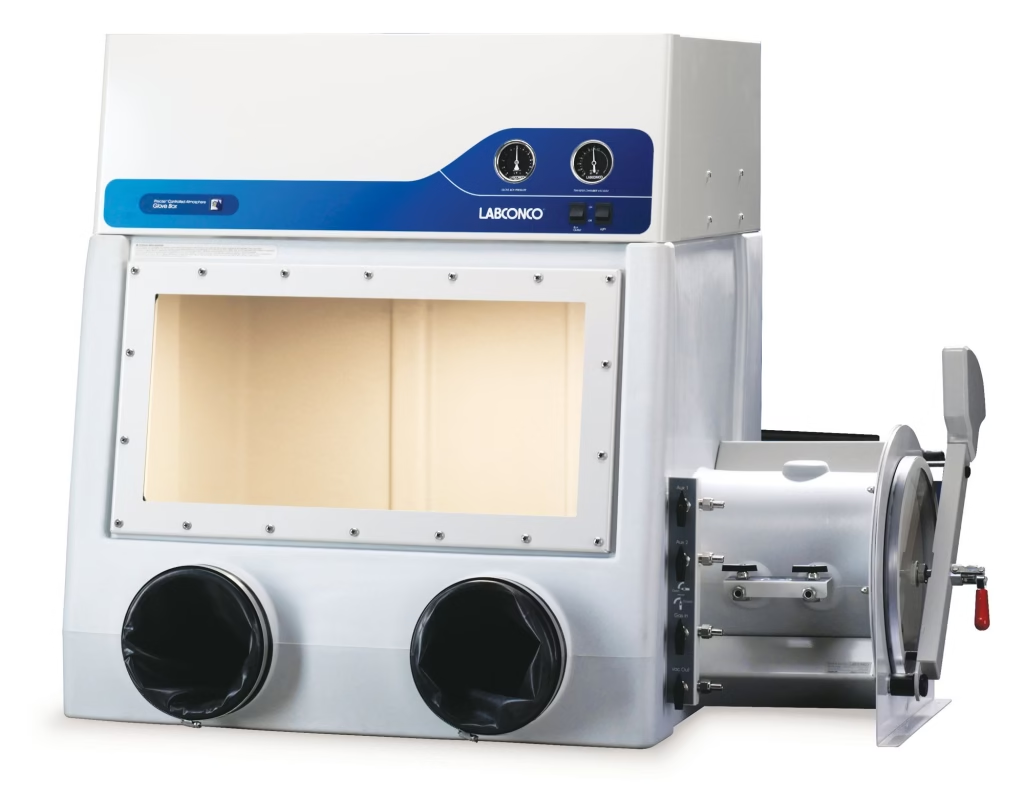
Labconco glove box
Description
Controlled atmosphere glove box that provide a leak-tight environment for work with contamination-sensitive materials. Procedures where low levels of oxygen or moisture are important are typical applications for these glove boxes.
-Interior working width: 85 cm.
Contacts
- Elmira Moosavi
- Lucas Hof
- Philippe Bocher
- Vincent Demers
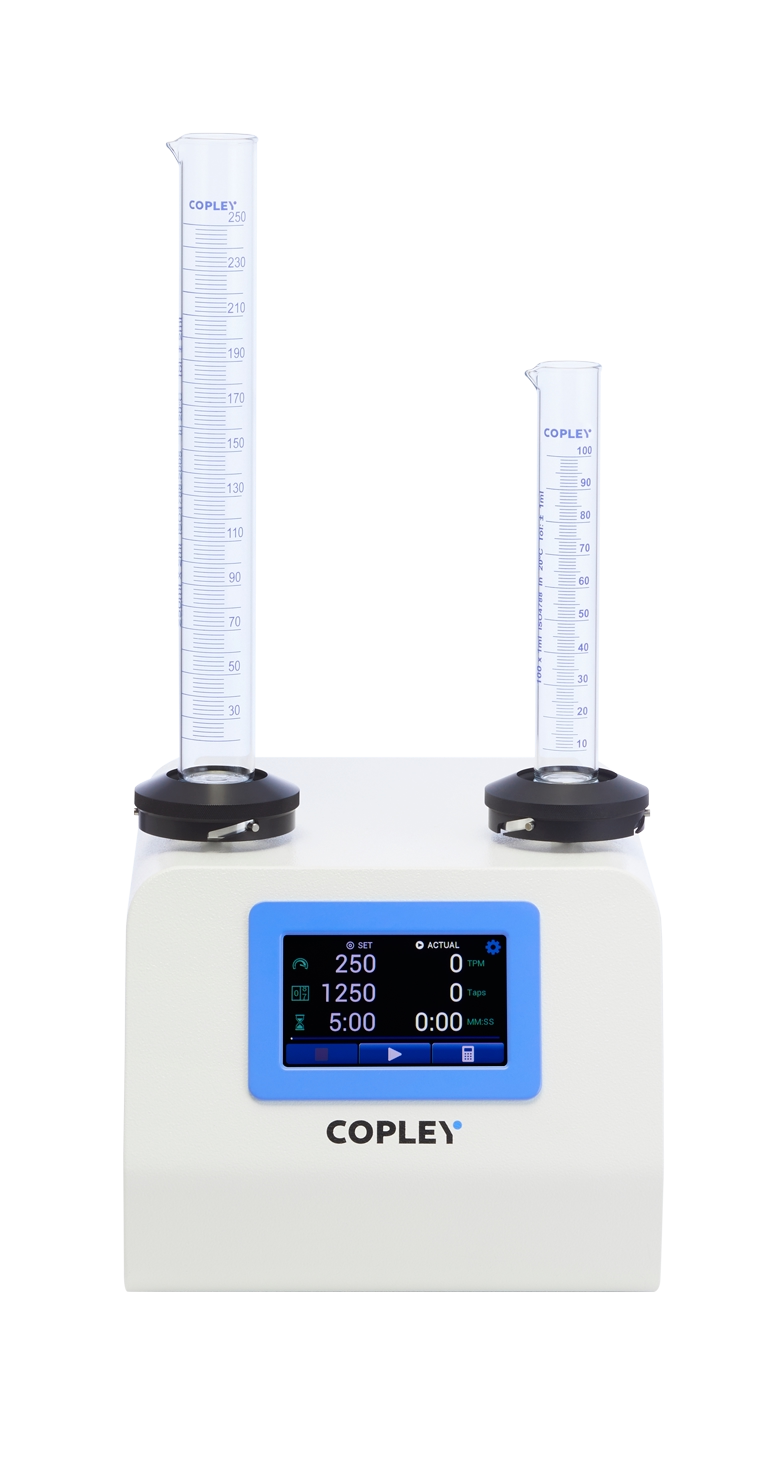
Copley tapped density
Description
Equipement used for measurement of the tapped density of powders, granules and other bulk solids.
Contacts
- Elmira Moosavi
- Lucas Hof
- Philippe Bocher
- Vincent Demers
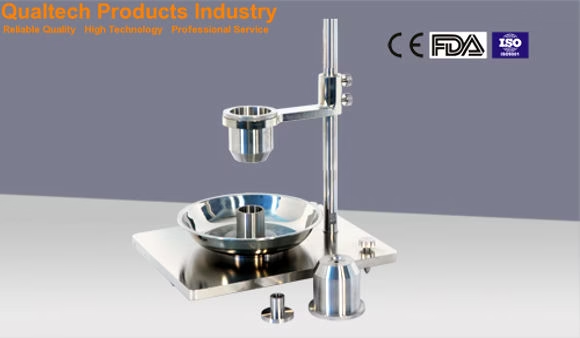
Qualtech apparent density
Description
Various instruments for measuring the flowability and the apparent density of dry powders. Funnels available: Gustavsson, Hall and Carney.
Contacts
- Elmira Moosavi
- Lucas Hof
- Philippe Bocher
- Vincent Demers
Pycnometer AccuPyc II 1340
Description
Equipement used for measurement of the true density of powders, granules and other bulk solids.
-Chamber size: 10 cm3.
Contacts
- Elmira Moosavi
- Lucas Hof
- Philippe Bocher
- Vincent Demers
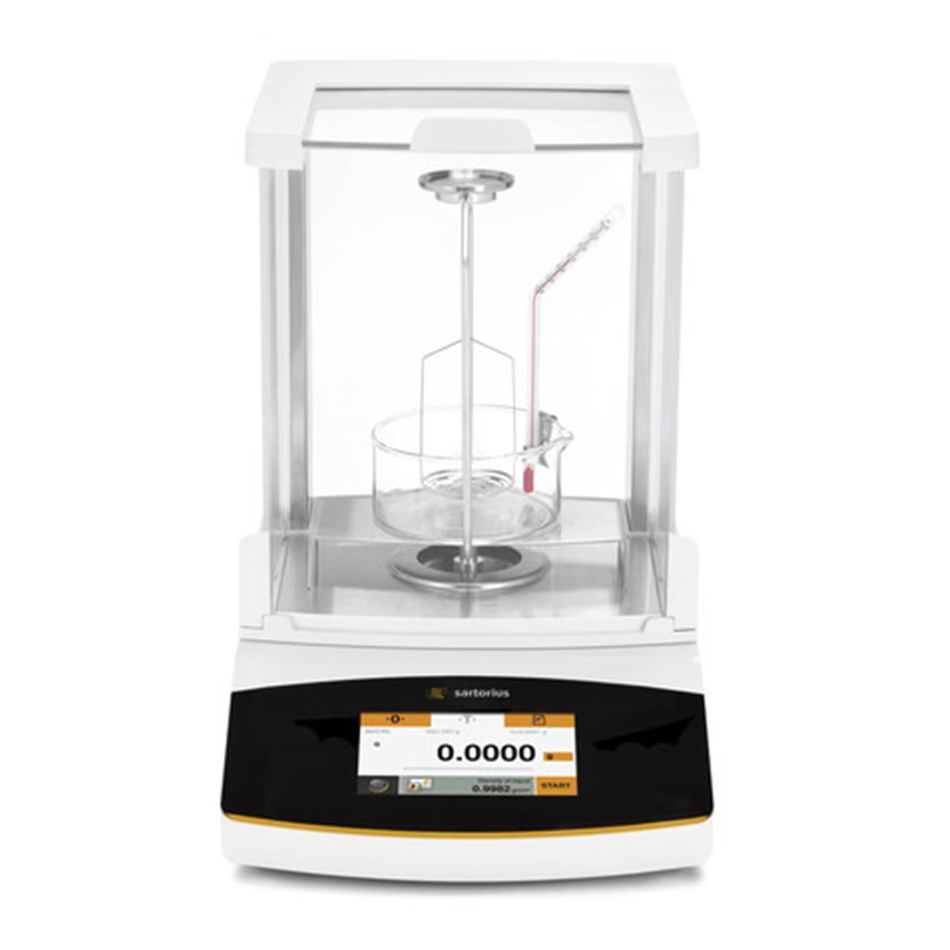
Sartorious density kit
Description
Equipement used for measurement of the true and apparent density of porous solids using Archimedes’ principle in water or oils.
-Balance max weight: 320 g.
-Precision: +/- 0.0001 g.
Contacts
- Elmira Moosavi
- Lucas Hof
- Philippe Bocher
- Vincent Demers
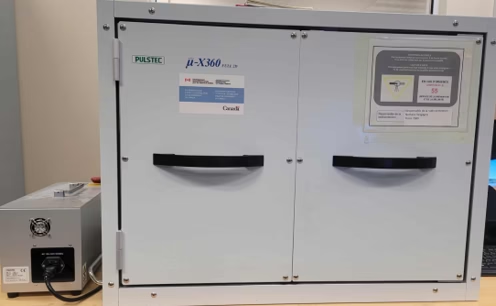
Pulstec µ-360n XRD
Description
Measures and analyzes residual stresses in mechanical components of various configurations, shapes, geometries, surface structures, and chemical compositions. Applies the cos 𝛼 technique, in which a single X-ray exposure is detected using a two-dimensional sensor and the stress is then determined using the full Debye-Scherrer ring. This system has the following features: easy installation, non-destructive, fast measurement speed, lightweight, on-site measurements with analysis option, and low X-ray power.
Contacts
- Elmira Moosavi
- Lucas Hof
- Philippe Bocher
- Vincent Demers
Mechanical and Thermal Testing
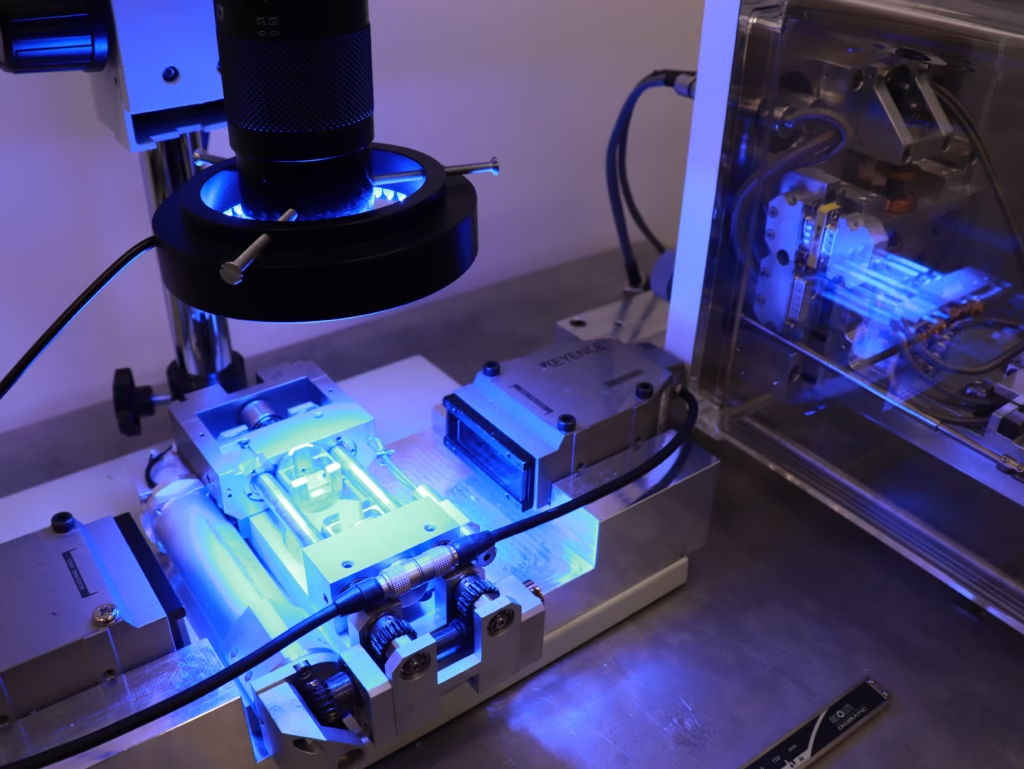
Machine de micro-traction
Description
Tensile tests on small samples measuring a few tens of millimeters (important if the parts available do not allow standard samples to be cut in accordance with ASTM E8). The installation also allows deformation to be measured using digital image correlation.
Contacts
- Elmira Moosavi
- Lucas Hof
- Philippe Bocher
- Vincent Demers

Machine d’essai de fatigue par flexion rotative Instron, R. R. Moore
Description
4-point rotary bending tests.
Contacts
- Elmira Moosavi
- Lucas Hof
- Philippe Bocher
- Vincent Demers

MTS Alliance RF/200
Description
Traction machine.
Contacts
- Elmira Moosavi
- Lucas Hof
- Philippe Bocher
- Vincent Demers

LANDMARK 370 servo-hydraulic system
Description
Tensile testing machine, 100kN load cell used to perform tensile compression fatigue tests.
Contacts
- Elmira Moosavi
- Lucas Hof
- Philippe Bocher
- Vincent Demers

Machine de trempe par induction
Description
Machine permettant de faire des trempes à eau de roues dentées après une chauffe de la zone dentée par induction.
Contacts
- Elmira Moosavi
- Lucas Hof
- Philippe Bocher
- Vincent Demers
Materials Manufacturing and Processing

Imprimante 3D MEX
Description
Equipment used to manufacture parts by extruding molten material. The operating range of the device is 20°C to ~150°C. The maximum dimensions of the parts are 10 x 10 x 20 cm (approx.).
Contacts
- Elmira Moosavi
- Lucas Hof
- Philippe Bocher
- Vincent Demers

Fours à hydrogène
Description
Series of 3 furnaces for performing heat treatments in different atmospheres (hydrogen, nitrogen, argon, vacuum):
-GLO 40/11-1G: Up to 1100°C (750°C under vacuum).
-HTK 8 Mo/16: Up to 1600°C.
-HTK 25 W/22: Up to 2200°C.
Contacts
- Elmira Moosavi
- Lucas Hof
- Philippe Bocher
- Vincent Demers

Machine SACE
Description
Machine built in-house for micro-machining using spark-assisted chemical etching (for non-conductive materials that are difficult to machine).
Contacts
- Elmira Moosavi
- Lucas Hof
- Philippe Bocher
- Vincent Demers
Machine SACE industriel
Description
Industrial micro-machining machine using spark-assisted chemical etching – clean room compatible, located in the LACIME infrastructure.
Contacts
- Elmira Moosavi
- Lucas Hof
- Philippe Bocher
- Vincent Demers
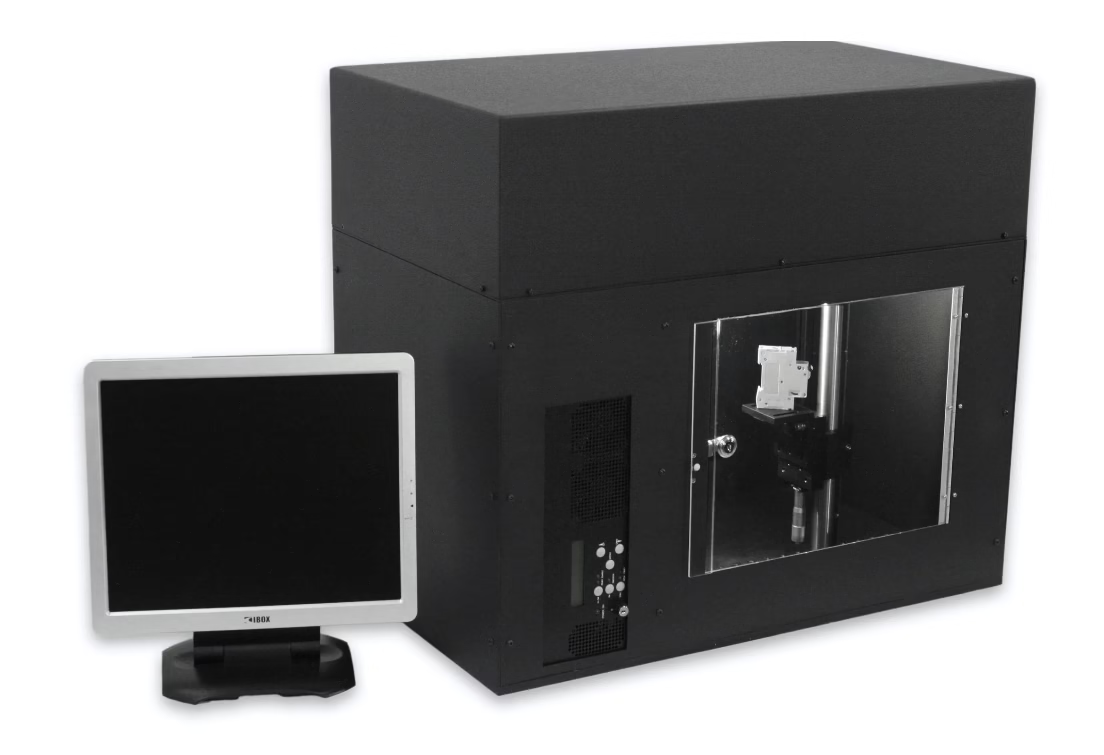
Laser UV
Description
Marking system specifically designed for UV lasers at 355 nm. It takes advantage of the short UV wavelength to provide a small spot size and a large depth of focus. UV lasers also take advantage of the cold marking process, not requiring high average powers and allowing damage free marking on many materials. The Samurai marking system is also capable of UV ablation and engraving on many materials. Such materials include: wires, metals, sapphire, glass, diamond, polyamides, PCBs, coatings, ITO removal, silicon wafers, ceramics, plastics, fiber, paper, polyimides, etc.
.
Contacts
- Elmira Moosavi
- Lucas Hof
- Philippe Bocher
- Vincent Demers
Imprimantes 3D MEX
Description
Various extrusion-based 3D printers (Prusa, Ultimaker, Ender, Qidi).
Contacts
- Elmira Moosavi
- Lucas Hof
- Philippe Bocher
- Vincent Demers
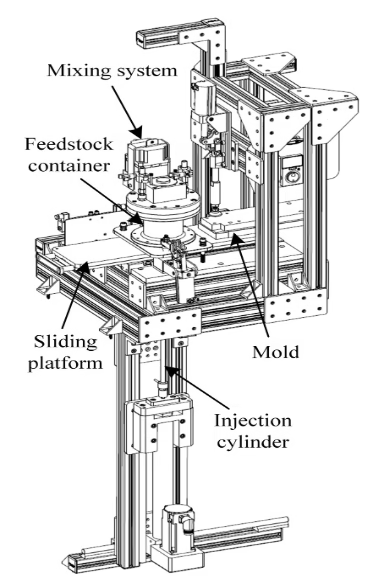
Presse à injection MIM
Description
LPIM (low pressure injection molding) injection press for the production of green parts. This system consists of a vacuum mixing bowl for heating, mixing, and degassing the feedstock before it is injected using a piston into a mold cavity held in place by clamping pressure. This press also allows for the control of several injection parameters, such as injection flow rate, feedstock temperature, and mold temperature.
Contacts
- Elmira Moosavi
- Lucas Hof
- Philippe Bocher
- Vincent Demers

Sunstone Orion 150s Microwelder
Description
Contacts
- Elmira Moosavi
- Lucas Hof
- Philippe Bocher
- Vincent Demers
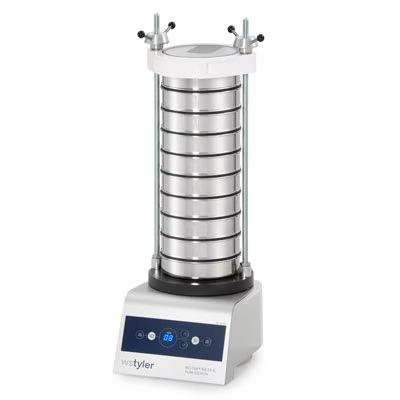
W.S. Tyler Ro-Tap E Sieve Shakers
Description
Equipment used for dry powder separations of light to medium-duty applications with 8in (203 mm) test sieves using vibratory agitation.
Contacts
- Elmira Moosavi
- Lucas Hof
- Philippe Bocher
- Vincent Demers
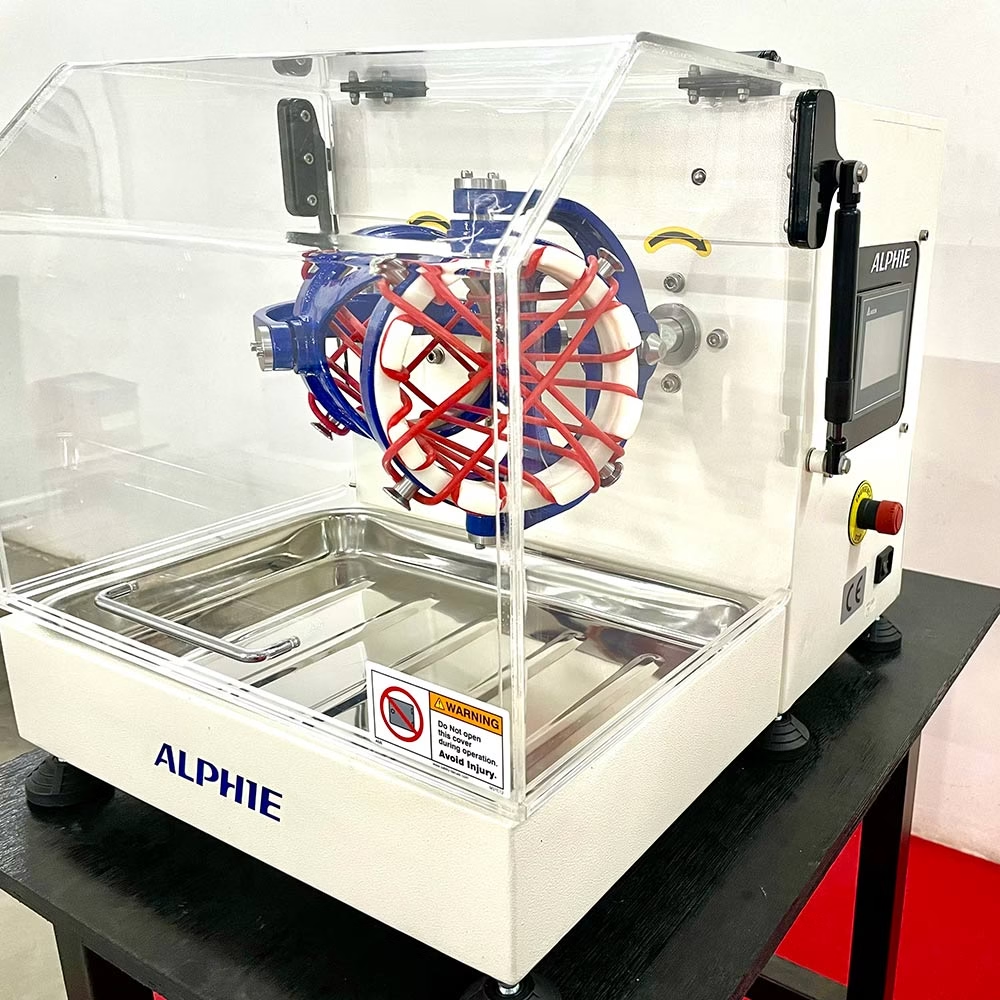
Alphie mixer
Description
Equipment used for homogeneous mixing of powder (different bulk density or different proportion of mixing or different shape and particle size).
-Max moving mass: 5 kg
-Max container size: Dia 115 mm X 275 mm Long
-Revolution: 10-80 rpm
Contacts
- Elmira Moosavi
- Lucas Hof
- Philippe Bocher
- Vincent Demers
Metrology and 3D Scanning
Go!SCAN 20 Creaform
Description
Contacts
- Elmira Moosavi
- Lucas Hof
- Philippe Bocher
- Vincent Demers
Go!SCAN 50 Creaform
Description
Contacts
- Elmira Moosavi
- Lucas Hof
- Philippe Bocher
- Vincent Demers